 Contact Us
 Delivery & Returns
 Remote Support
 My Account








When productivity drops, many businesses look at staffing, processes, or technology. But one major factor is often overlooked: the workspace itself.
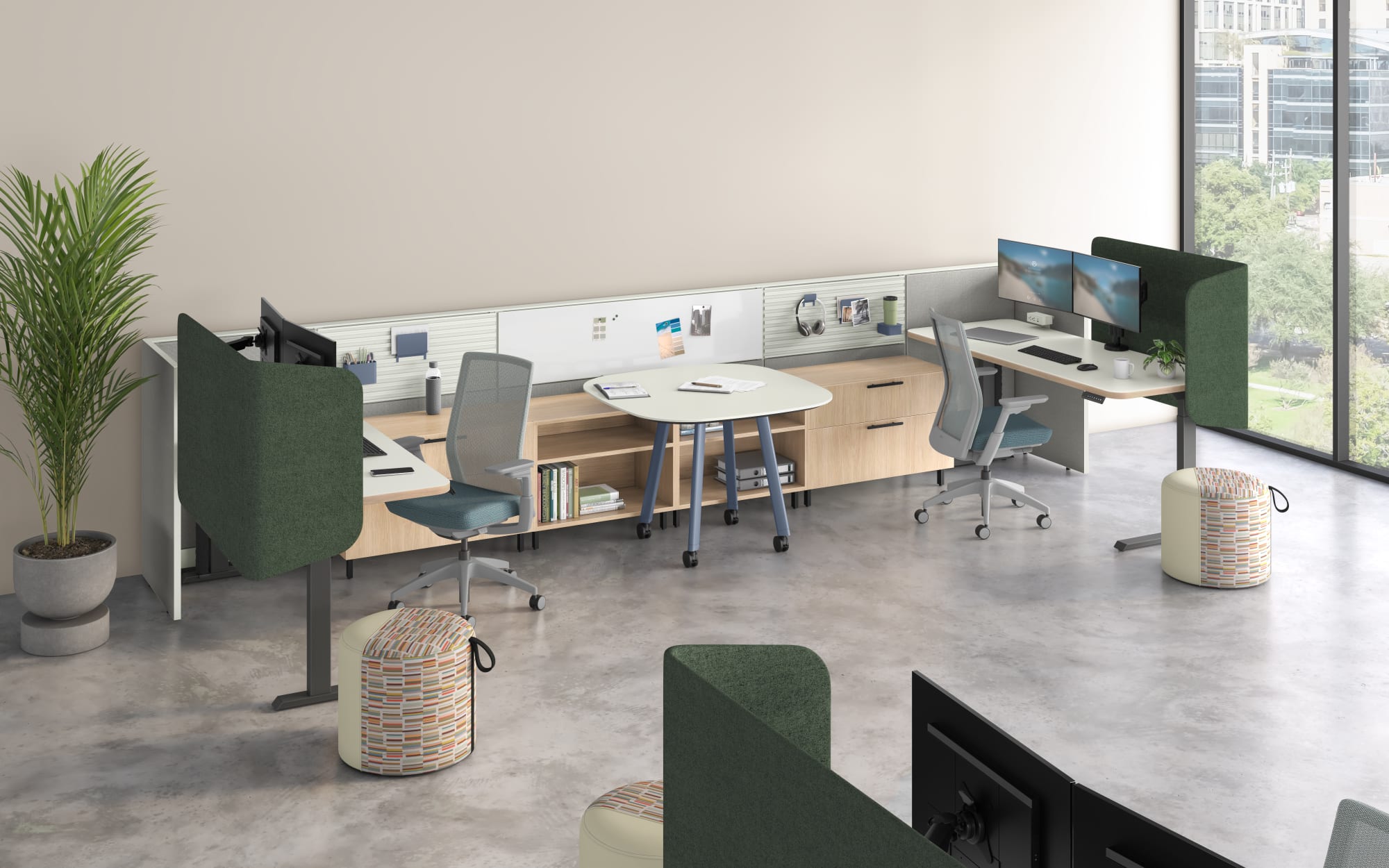
Across South Carolina and North Carolina, businesses of all sizes are discovering that office design, furniture layout, and workplace functionality can have a major impact on daily efficiency. If your office feels cluttered, uncomfortable, outdated, or distracting, it could be hurting productivity more than you realize.
Sometimes the problem is not the people in the space—it is the space itself.
- Poor Layouts Waste Time
A workspace that lacks flow can make simple tasks harder than they need to be. Employees may spend time walking around obstacles, searching for supplies, waiting to use shared areas, or dealing with crowded walkways. These small interruptions add up over the course of a day.
Signs of a poor layout include:
- Congested traffic areas
- Departments that should work together being too far apart
- Limited storage
- Workstations placed too close together
- Unused or awkward empty areas
A well-planned layout helps work move naturally.
- Uncomfortable Furniture Reduces Focus
If chairs are worn out, desks are the wrong height, or workstations are poorly set up, discomfort can quickly turn into distraction.
Physical discomfort often leads to:
- Difficulty concentrating
- Frequent breaks
- Low energy throughout the day
- Neck, back, or wrist strain
- Lower job satisfaction
When employees are uncomfortable, productivity usually follows.
- Too Much Noise and Distraction
Many offices struggle with noise levels, constant interruptions, and lack of privacy.
Phones ringing, conversations nearby, and open areas without quiet zones can make it difficult for employees to focus on detailed work.
Even highly motivated teams can struggle in spaces that make concentration difficult.
- No Room for Collaboration
While quiet focus is important, so is teamwork. Some workplaces lack areas where employees can meet, brainstorm, or solve problems together.
Without designated collaboration areas, teams may rely on crowded desks, hallways, or makeshift meeting spots. This can make communication less effective and discourage creativity.
- Outdated Spaces Affect Morale
Employees notice when a workspace feels neglected. Old furniture, poor lighting, worn finishes, and clutter can create the feeling that the environment—and sometimes the people in it—are not a priority.
A clean, modern, functional workspace can improve morale, pride, and engagement.
- Your Space May No Longer Fit Your Business
Many offices were designed years ago for a different team size, workflow, or style of work.
As businesses grow and change, spaces often stay the same. The result can be:
- Teams outgrowing their areas
- Not enough storage
- Lack of meeting rooms
- Inefficient workstation setups
- Space being used in the wrong ways
What worked five years ago may now be holding you back.
The Bottom Line
Your workplace can either support productivity or quietly work against it every day.
If employees seem distracted, uncomfortable, frustrated, or disconnected, it may be worth looking beyond processes and asking a simple question:
What’s wrong with your space?
If your business is in the Carolinas and you’re ready to improve your workplace, contact Herald Office Solutions for expert office furniture, design, and space planning solutions.
